 Real Estate Camera
If you stage photos every week, Virtual Staging AI's subscription makes sense. If you list a vacant home a few times a year, a pay-per-pack app like Real Estate Camera costs less, because its credits never expire and nothing resets at the end of the month. As of September 2026, Virtual Staging AI's cheapest plan runs $192 a year for 6 photos a month. Real Estate Camera's smallest pack is $9.99 for 20 credits, and a staged room costs 2.
Real Estate Camera is our app, so I've stuck to what each company publishes. Every Virtual Staging AI detail below comes from its pricing page, its FAQ or its homepage, checked this month.
What Virtual Staging AI charges
Four plans, shown on yearly billing. The page has a monthly toggle and labels yearly as "up to 50% off."
| Plan | Photos a month | Per month (yearly billing) | Billed each year | Per photo if you use them all |
|---|---|---|---|---|
| Basic | 6 | $16 | $192 | $2.67 |
| Standard | 20 | $19 | $228 | $0.95 |
| Professional | 60 | $39 | $468 | $0.65 |
| Enterprise | 150 | $79 | $948 | $0.53 |
Every plan includes unlimited renders and downloads, furniture removal and no watermark. The pricing page lists a 10-second turnaround, and the homepage says 50+ design styles. Enterprise adds API access.
Four lines in the FAQ matter more than the headline price:
- "No, unused credits do not roll over." Credits renew on the same date each month.
- A credit is an upload. Once a photo is in, you can re-render it as often as you like at no charge.
- Furniture removal happens only at upload. If you want another removal pass, you upload again and spend another credit.
- On a yearly plan, you're "committing to the full year." Cancelling stops the renewal. For refunds, the FAQ points to a 7-day money-back guarantee under its refund policy.
There's also a separate Image Editing subscription for enhancement and day-to-dusk. The FAQ describes it without a price, so check it in your account before you count it.
Subscription vs pay-per-pack, with real numbers
The per-photo price on a plan assumes you use every photo, every month. Most agents don't list vacant homes on a schedule. Here's what a year looks like at three different paces.
| Your year | Virtual Staging AI | Real Estate Camera |
|---|---|---|
| 4 vacant listings, 5 rooms each (20 staged photos) | Basic, $192. About $9.60 per photo you actually used. | 40 credits. One $24.99 pack covers it with 20 credits left over. |
| 2 vacant listings a month, 5 rooms each (120 staged photos) | Standard, $228. About $1.90 per used photo. | 240 credits. One 150 pack and two 60 packs, $99.97. |
| 60 staged photos every month (720) | Professional, $468. $0.65 per photo. | 1,440 credits. Ten 150 packs, $499.90. |
At high volume, Virtual Staging AI is cheaper, and its unlimited re-renders widen the gap. On Real Estate Camera, a rerun you don't like costs credits again. Only failed edits refund automatically.
At low volume, the subscription costs more because of the months you don't use. Twenty staged photos on a $192 plan works out to nearly $10 each, and the unused allowance is gone at each renewal. A pack you bought in March still works in November.
A "credit" isn't the same unit on both. On Virtual Staging AI, one credit is one uploaded photo, and every re-render of it is free. On Real Estate Camera, each edit has its own price: Enhance is 1 credit, Declutter is 2, staging is 2. A furnished room you empty and then stage costs 4 credits there, and 1 upload on Virtual Staging AI if its built-in removal does the job in one pass.
The middle row is where you have to be honest. Two vacant listings a month, every month, is steady work. If your year is lumpier, the pack math improves.
Feature differences that matter
Where Virtual Staging AI is ahead
- More styles. 50+, according to its homepage. Real Estate Camera has eight: Modern, Scandinavian, Modern Farmhouse, Luxury Contemporary, Traditional, Mid-Century, Coastal and Japandi.
- Free re-renders. Once you've uploaded a room, you can try again as often as you like. That's a real advantage for a picky seller.
- Some control over removal. Its FAQ explains that you can edit a mask to choose which furniture to remove and which to keep. Real Estate Camera's Declutter clears the room in one pass, without a mask.
- An API on the Enterprise plan, if you run a brokerage or photography business and want staging built into your own tools.
Where Real Estate Camera is different
- It's a camera app. You shoot on iPhone, iPad or Android and edit right there, or upload on the web. One account and one balance cover both.
- Enhancement uses the same credits. Enhance fixes light, white balance and leaning verticals and recovers window views for 1 credit. You don't need a second subscription to fix the photos you aren't staging.
- It keeps the sky as shot. Enhance never turns a grey sky blue and never changes architecture or landscaping. If you wanted a twilight or blue-sky version, that's a limitation. In California, that keeps most Enhance-only photos inside the law's exclusion for lighting and color, though you should still check any window that was blown out in the original.
- Credits never expire, and failed edits refund automatically. The first credit is free.
Where they're about the same
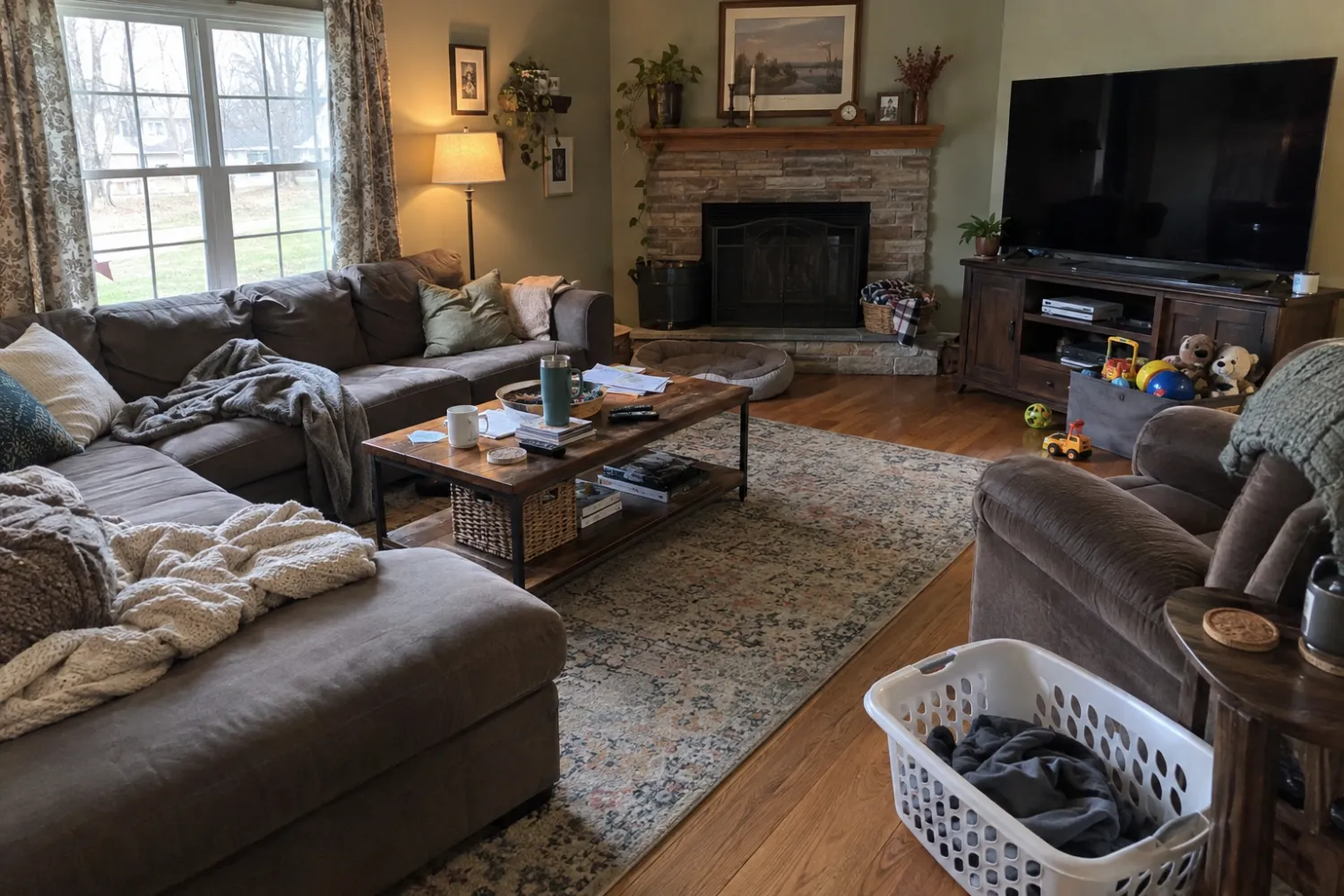
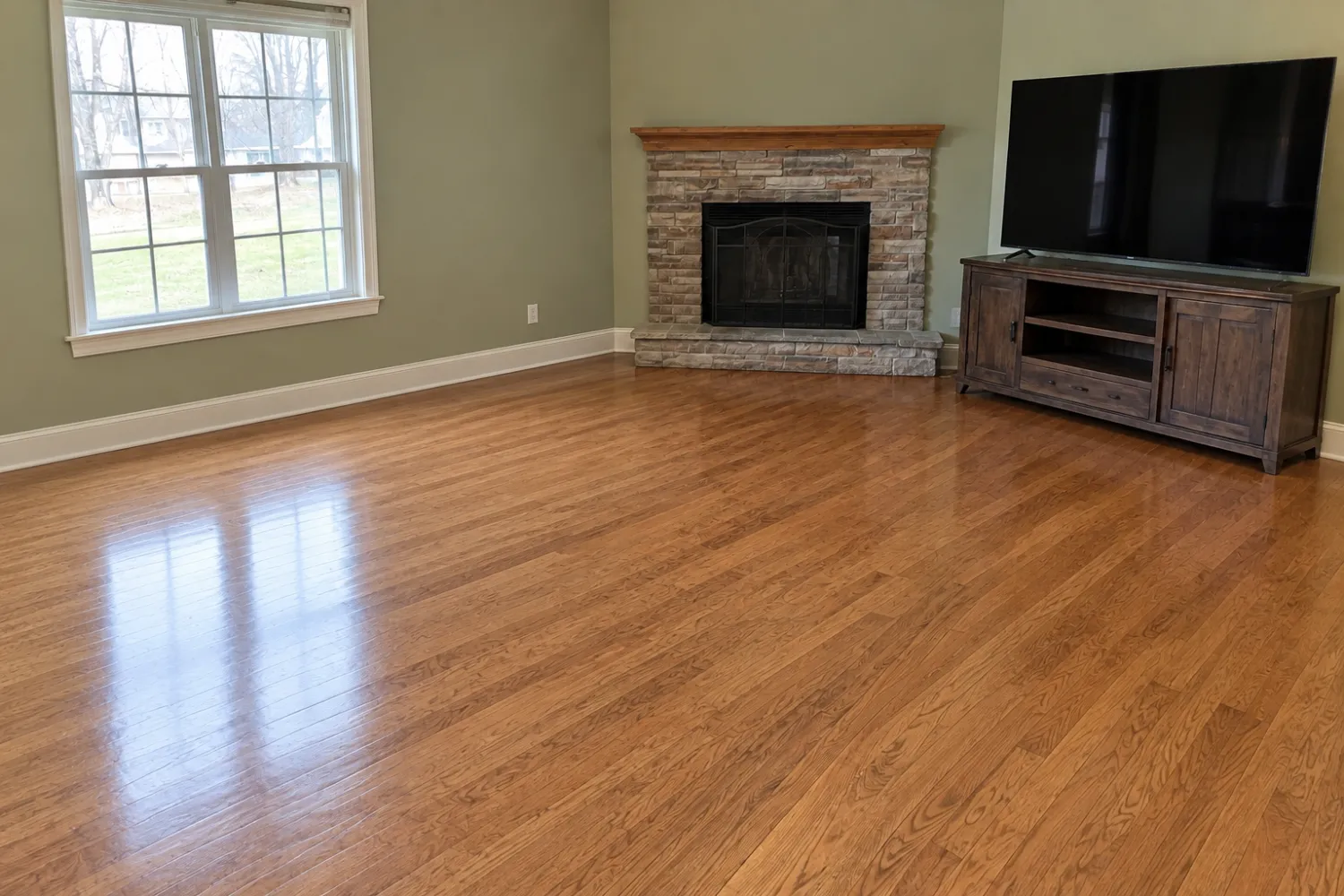
Both are one-click tools. Neither lets you drag a chair across the room. If the layout is wrong, you render again. Both deliver in seconds to about a minute: Virtual Staging AI says 10 seconds, and Real Estate Camera takes 20 to 60. For hand placement, look at Apply Design's editor or a human service. The best virtual staging apps guide covers both, and the BoxBrownie alternative guide compares an app with a human editor directly.
Check the render, whichever tool you use
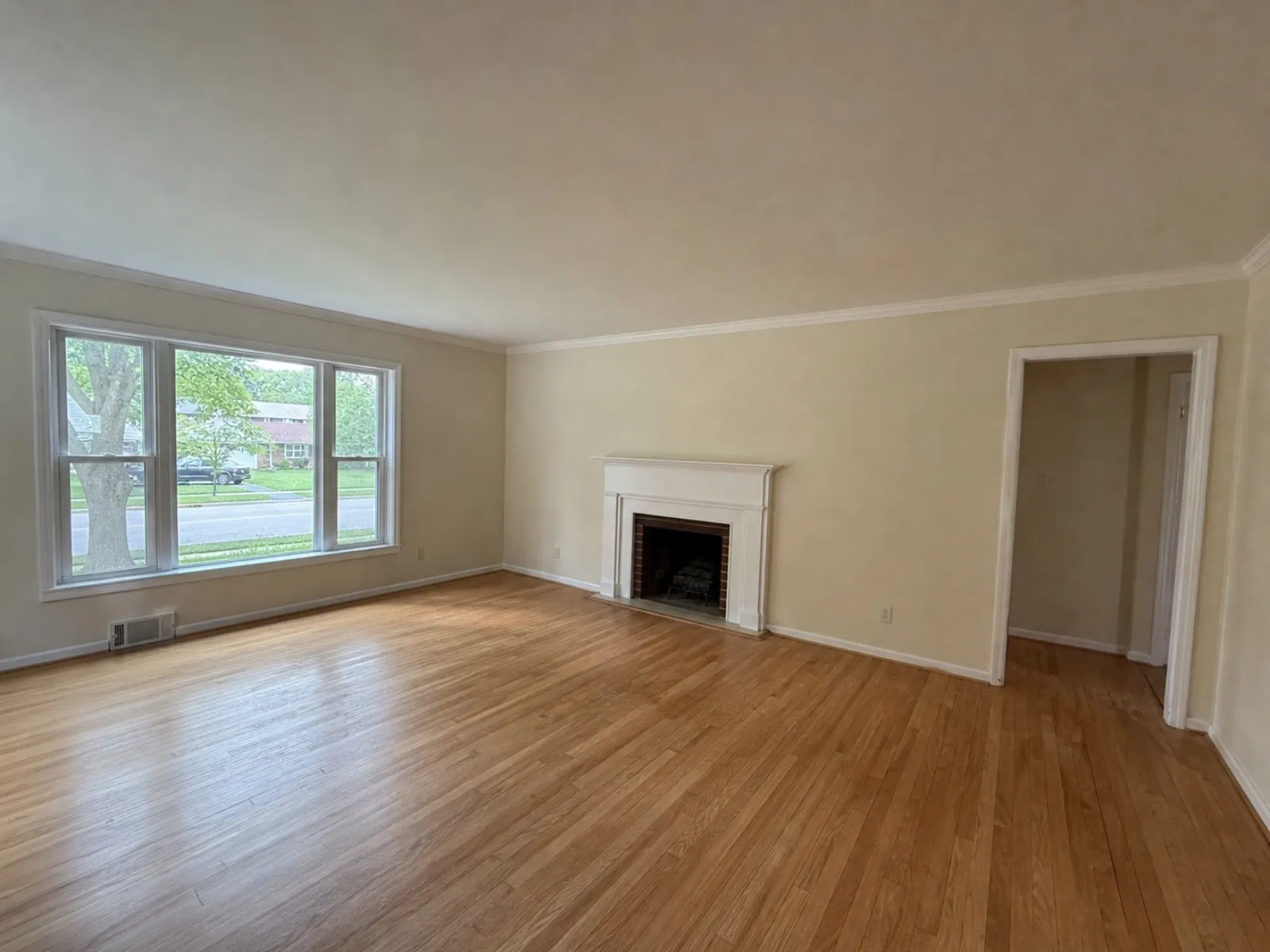
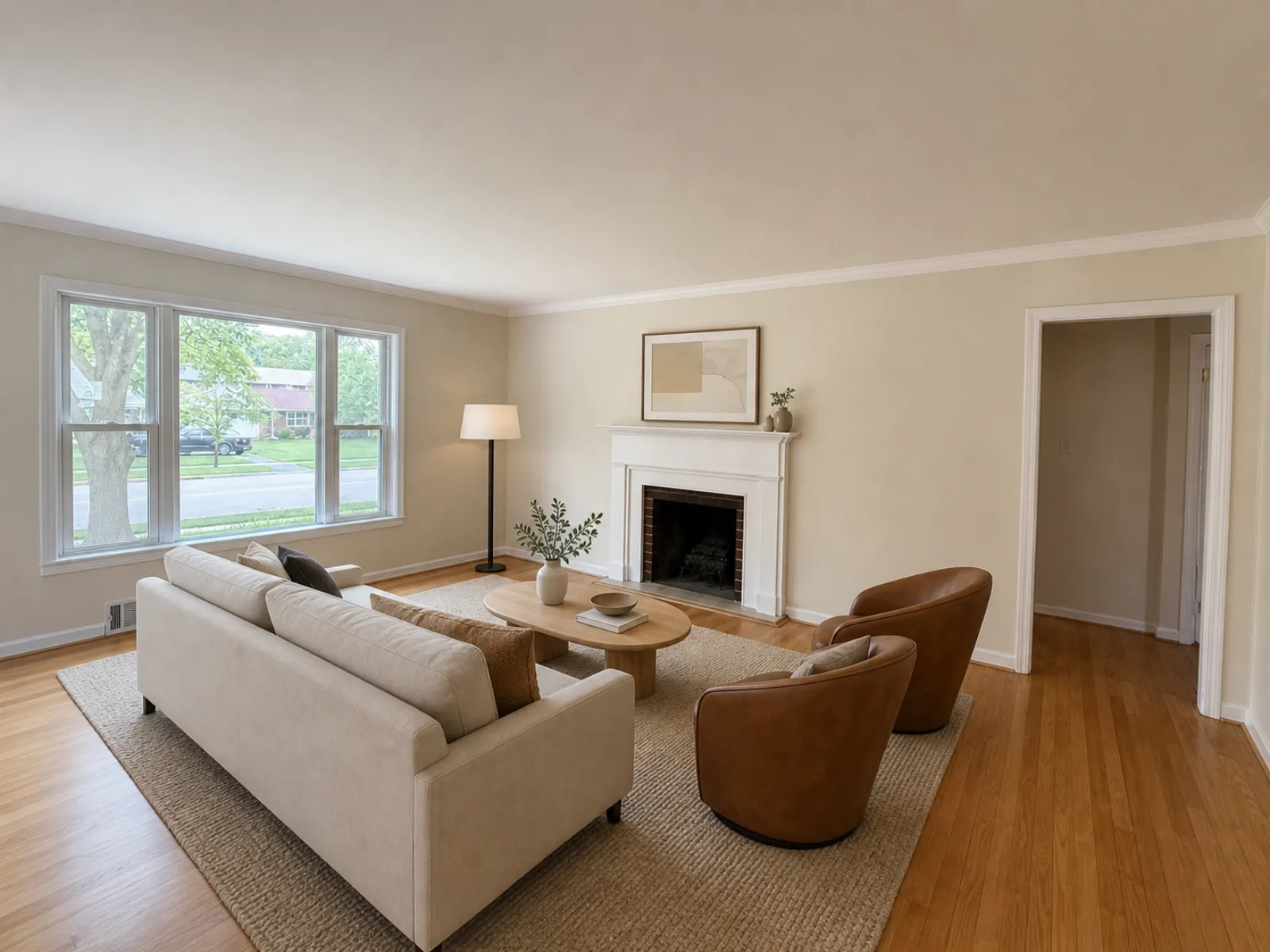
AI staging can shift a window or reshape a mantel. Put the original and the render side by side before uploading. If anything permanent changed, run it again. And label it. Most MLSs want a "virtually staged" note and many want the original photo next to it. The MLS rules guide has the board-by-board details, and California agents should read the AB 723 guide too.
Which one I'd pick
- You stage 20 or more rooms every month, steadily: Virtual Staging AI's Standard or Professional plan. The per-photo price and free re-renders are hard to beat.
- You list vacant homes a few times a year: buy packs. Real Estate Camera's never expire, so you only pay for rooms you stage.
- You shoot your own photos on a phone: Real Estate Camera keeps shooting, Enhance, Declutter and staging in one app. Our walkthrough of editing a whole listing on a phone shows the flow.
- You need more than eight styles: Virtual Staging AI.
Both let you try before paying much. Virtual Staging AI's homepage says you can try it with no sign-up and no credit card, and Real Estate Camera gives you the first credit free. Run the same empty room through each and compare the windows as closely as the sofa. For a fuller cost comparison across seven tools, see how much virtual staging costs. For tips on getting the base photo right, read fixing dark real estate photos.
Questions
How much does Virtual Staging AI cost?
As of September 2026 its pricing page lists $16 a month for 6 photos, $19 for 20, $39 for 60 and $79 for 150. Those prices are on yearly billing, so the plans cost $192, $228, $468 and $948 a year up front.
Do Virtual Staging AI credits roll over?
No. Its FAQ says unused credits do not roll over, and credits renew on the same day each month as your first purchase.
What's the difference between a subscription and a credit pack?
A subscription gives you a monthly allowance whether you list anything or not. A credit pack is a one-time purchase you draw down as you go. On Real Estate Camera, credits never expire, so a quiet month costs nothing.
Which is cheaper, Virtual Staging AI or Real Estate Camera?
It depends on volume. At a few vacant listings a year, packs cost less because nothing goes unused. At 60 staged photos every month, Virtual Staging AI's Professional plan works out to $0.65 a photo with unlimited re-renders, which is hard to beat.