 Real Estate Camera
The best virtual staging app for most realtors in 2026 depends on how often you list vacant homes. A few a year? Use a pay-per-use app so you're not paying for an idle subscription. For weekly listings, Collov AI or REimagineHome will get you the lowest price per photo. Apply Design lets you move the sofa yourself. For a human designer, BoxBrownie or VirtualStaging.com costs $24 a photo.
These are the seven tools I'd consider in September 2026, including what they cost and where they fall short. I pulled every price and feature from the company's own site this month. No scores or rankings, because the right answer changes with the listing.
The comparison
| Tool | Type | Entry price (Sept 2026) | Stated speed | Move furniture yourself? |
|---|---|---|---|---|
| Virtual Staging AI | AI, web | $16/mo for 6 photos, billed yearly | Seconds | No, regenerate instead |
| Collov AI | AI, web | $19/mo for 60 credits, billed yearly | 10 seconds | Add, edit or remove furniture on the $49 plan |
| REimagineHome | AI, web | $19/mo for 30 credits | Not stated as a number | By chat instructions on Pro and above |
| Apply Design | AI plus DIY editor | $7 to $10 per coin, 1 coin per DIY photo | 10 to 15 minutes | Yes, drag and drop |
| BoxBrownie | Human designers | $24 per photo | 48 hours | Send instructions |
| VirtualStaging.com | Human designers | $24 per photo | 24 hours, 4 to 8 hours rush | Send instructions, unlimited revisions |
| Real Estate Camera | AI, phone app and web | $9.99 for 20 credits, 2 credits per room | 20 to 60 seconds | No |
For the price per staged photo and a worked example for a full listing, see how much virtual staging costs. That guide also covers subscription traps.
The seven tools
Virtual Staging AI
Virtual Staging AI is the plain one-click option. After uploading, choose a room and style. The staged room arrives in seconds. The site lists 50+ design styles and includes furniture removal on every plan. Renders are unlimited, so a bad result costs you nothing but another click. Plans run from $16 a month for 6 photos to $79 for 150, on yearly billing.
Weak spot: the $16 plan is the cheapest, but it has the worst value per photo at $2.67. And you can't nudge a single chair. If the layout is wrong, you regenerate and hope.
Collov AI
Collov AI gives you 60 credits a month on its $19 Standard plan, including furniture removal and what it calls a one-click virtual staging disclaimer. The $49 Advanced plan adds furniture editing and material overlays, plus twilight and lawn replacement. Collov's free trials are watermarked.
Weak spot: you pay a year up front ($228 for Standard), and photo usage resets every month. Be careful with the extras, too. Swapping a lawn or changing flooring alters the property itself, which California's rules and several MLSs don't allow in listing photos even with a label. Use those features to show a buyer what's possible, and keep them out of the MLS gallery. The MLS rules guide explains where the line is.
REimagineHome
REimagineHome lets you work through changes in a conversation. On Pro ($36 a month for 200 credits) and above, you describe edits in chat and work step by step without starting over. You can upload reference photos, too. New accounts get 5 free designs. CRMLS's own compliance page names REimagineHome and says images made in it get a watermark automatically.
Weak spot: the $19 Essential plan leaves out chat editing and reference photos, the features that make REimagineHome stand out. Its page also lists Essential on "legacy tools." Budget for Pro.
Apply Design
Apply Design is for agents who want control over furniture placement. Auto staging costs 1.5 coins a photo. DIY staging costs 1 coin and gives you a drag-and-drop editor with what its homepage calls 18,000+ furniture pieces. Coins cost $7 to $10 depending on how many you buy, and the first image is free. Apply Design also handles 360° photos.
Weak spot: at $7 to $15 a photo, Apply Design is the priciest AI option here. DIY staging also takes your time. The site quotes 10 minutes in one place and 15 in another for auto staging, so either way, it's slower than the one-click apps.
BoxBrownie
BoxBrownie uses human editors at $24 a photo with a 48-hour turnaround. Its page lists styles from Modern and Farmhouse to Hamptons and Scandinavian, and you can send notes on color scheme and furniture placement. The same account covers image enhancement at $1.60 and item removal at $8. Handy if you already send your edits there.
Weak spot: BoxBrownie's two-day turnaround is a long wait when a listing goes live tomorrow. At $24 a photo, a ten-photo staging order costs more than a year of most AI plans.
VirtualStaging.com
VirtualStaging.com is the other big human service, also $24 a photo ($19.20 at its bulk rate). Delivery takes 24 hours, or 4 to 8 hours with rush service. It includes unlimited revisions and a money-back guarantee. The main practical difference from BoxBrownie is speed, 24 hours against 48.
Weak spot: VirtualStaging.com has the same tradeoff as any human service: you wait, and you pay per photo whether the room is simple or not. Its pricing page also says jobs with removal or renovation can take longer and cost extra after human review.
Real Estate Camera
Real Estate Camera is ours, so read this with that in mind. It's a camera app first. Shoot the listing on an iPhone, iPad or Android phone, or upload on the web. Enhance fixes light and straightens verticals for 1 credit. Declutter empties a furnished room for 2 credits, and virtual staging furnishes an empty room for 2. Results take 20 to 60 seconds, and every staged file is labeled "virtually staged." Credits never expire, and failed edits refund automatically. A staged room works out to $0.67 to $1.00 depending on the pack.
Weak spots, honestly:
- Eight styles: Modern, Scandinavian, Modern Farmhouse, Luxury Contemporary, Traditional, Mid-Century, Coastal and Japandi. Virtual Staging AI lists 50+.
- No manual furniture placement. You can't move a chair or swap one piece. If you don't like a result, you run it again, and that costs credits.
- The label is in the app and on export, not stamped onto the pixels. On a board that wants the disclosure on the image, like Canopy MLS, you add it yourself.
- No 360° photos or virtual tours. No twilight conversions, either.
- No human designer to take notes.
Real Estate Camera fits agents who shoot their own listings and want to finish the edits and staging on the same phone, while they're still at the property.
Check every render before it goes on the MLS
AI staging adds furniture, but it can also change the room. A window can grow a few inches. A mantel can change shape, or a doorway can shift. California's rules, Canopy MLS and NorthstarMLS all ban changes to permanent features. Whatever tool you use, you're responsible for catching them.
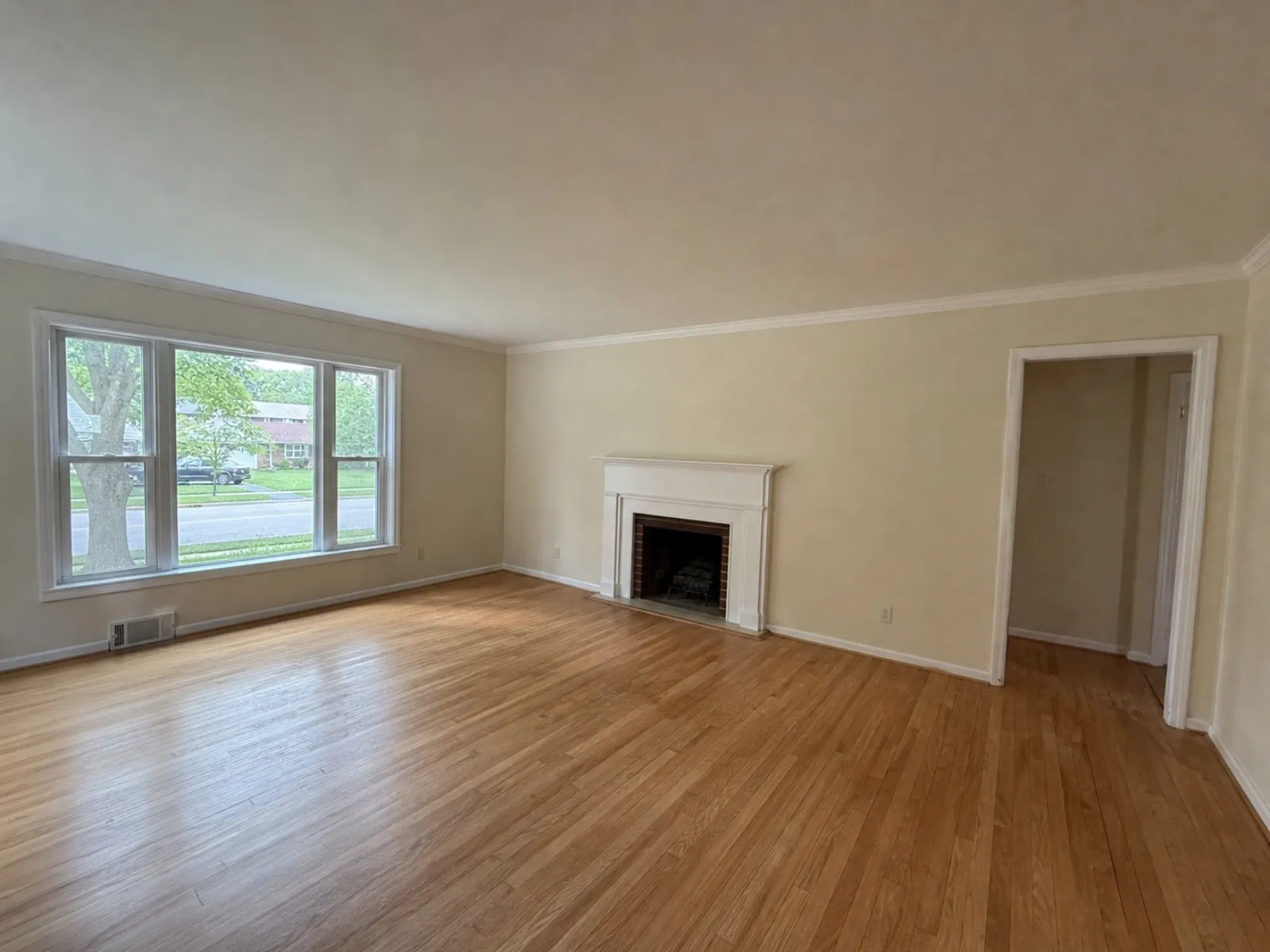
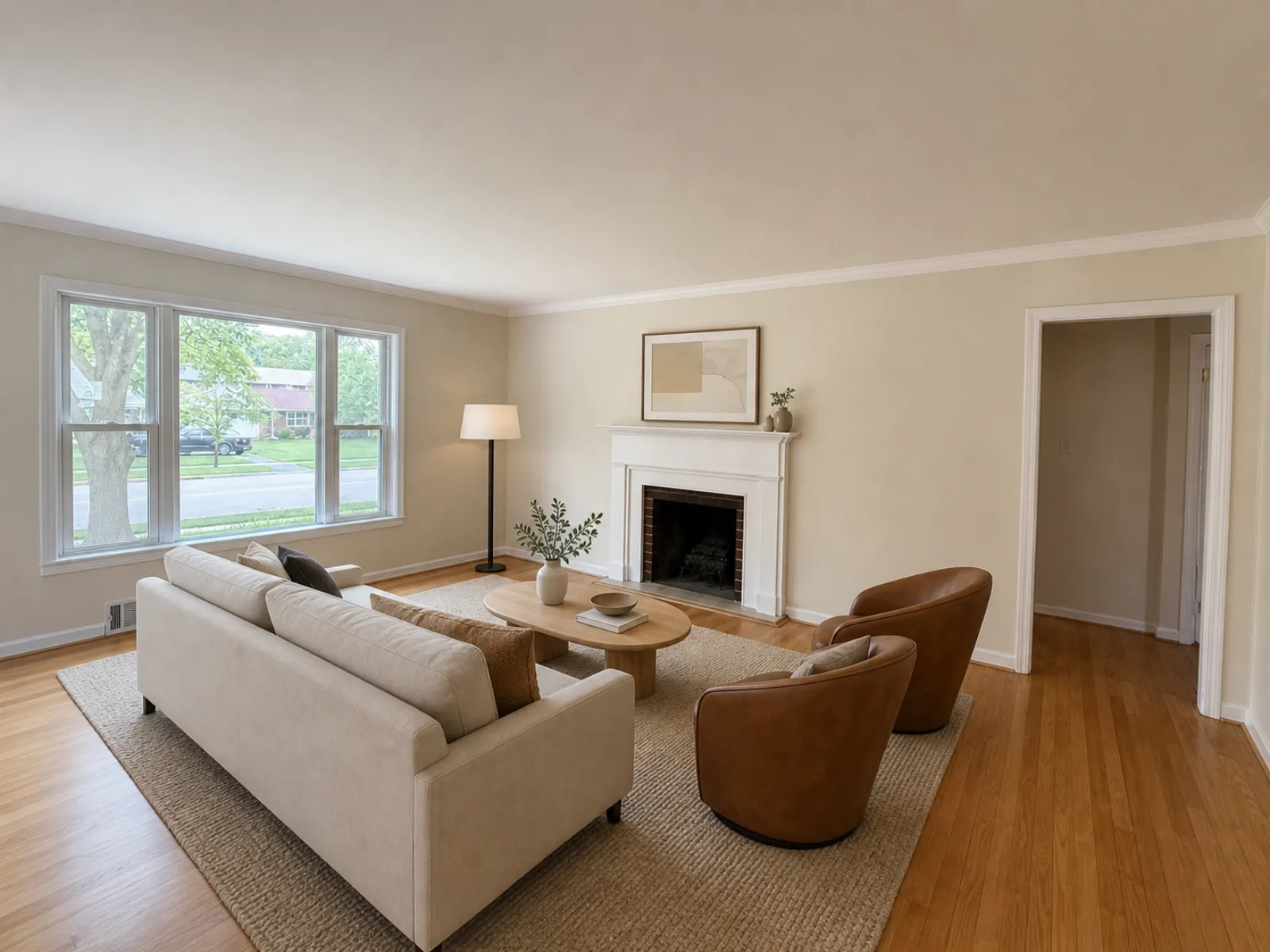
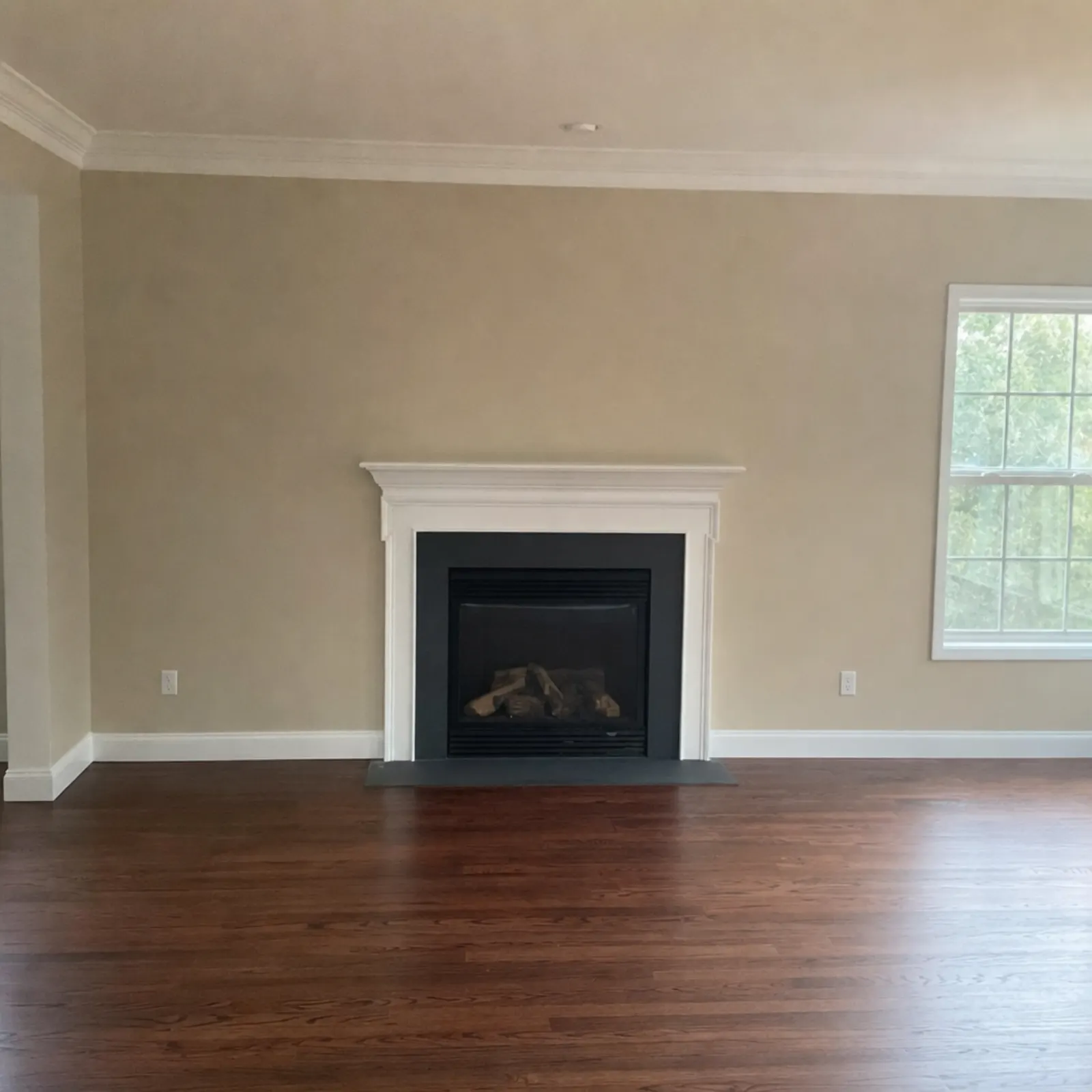

My routine takes thirty seconds per photo: open the original and staged versions side by side, then check the windows and doors first. Next, the fireplace. Check the floor and where the ceiling meets the wall, too. And fix the base photo before staging, because the staged version keeps whatever light and lean the original had. See fixing dark real estate photos and fixing vertical lines.
Which one to pick
- If you list a vacant home now and then, skip the annual plans. Real Estate Camera's packs and Apply Design's coins let you pay only when you stage. So does a human service that charges per photo.
- For weekly staging or a team, Collov AI or REimagineHome. Their high-volume plans get down to cents per photo.
- If you're picky about layout, choose Apply Design's editor or a human designer. BoxBrownie and VirtualStaging.com both take notes.
- For a high-end listing where the photos have to be perfect, use a human service. At $24 a photo, a designer who scales furniture to the actual room is cheap insurance on a big commission.
- If you shoot your own photos on a phone, Real Estate Camera keeps the work in one app. Shoot there, then fix and stage the photos. Start with the shot list and how to take listing photos with an iPhone.
- For a room full of the seller's furniture, remove it before staging. Most tools above do both. Removing furniture from photos covers the options and the labeling.
Several of these tools offer a free trial or a free first image. Before committing, run the same empty room through two or three of them. Look at the windows as hard as you look at the sofa.
Questions
What is the best AI virtual staging app for realtors?
It depends on volume and how much control you want. For occasional listings, a pay-per-use app avoids an unused subscription. For heavy volume, Collov AI and REimagineHome have the lowest per-photo prices. Apply Design has a drag-and-drop editor if you want to place the furniture yourself.
Is AI virtual staging as good as a human designer?
For a typical empty bedroom or living room, AI output is usable in seconds and costs cents to a few dollars. Human services such as BoxBrownie and VirtualStaging.com cost $24 a photo and take a day or two. A designer scales furniture by hand and follows specific instructions.
Can I virtually stage photos on my phone?
Yes. Real Estate Camera runs on iPhone, iPad and Android, so you can shoot the empty room and stage it before leaving the house. Most of the other tools here work in a web browser, which also runs on a phone.
Do virtual staging apps add the MLS disclosure for me?
Some help. Collov lists a one-click staging disclaimer, and CRMLS says REimagineHome adds a watermark automatically. Real Estate Camera labels every staged file. You're still responsible for following your own MLS's rule on where the label goes.