 Real Estate Camera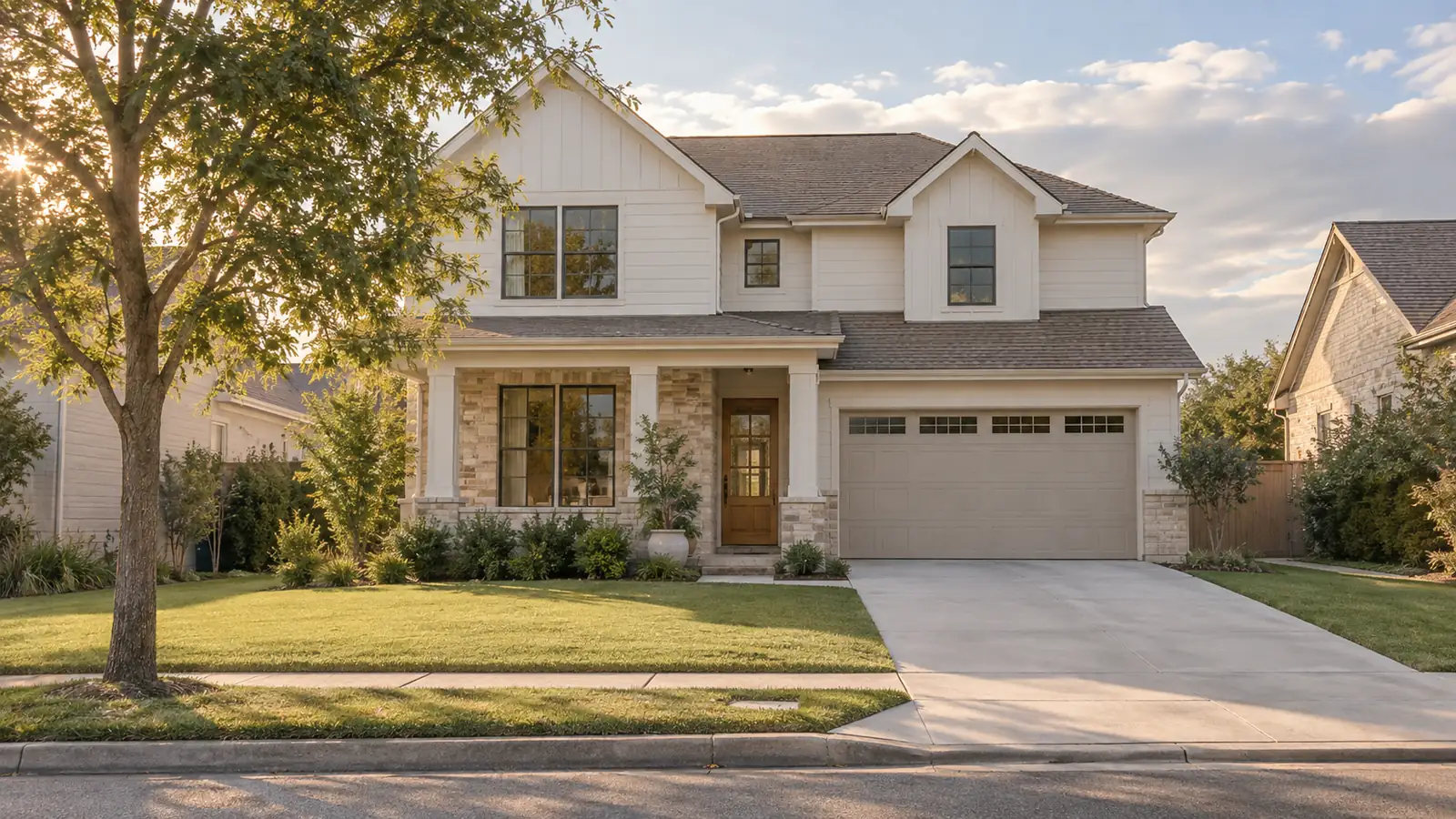
To photograph a house exterior well, shoot when the sun is shining on the front of the house. Stand at a front corner so the photo shows depth, and hold the phone level at about chest height. Start by clearing cars from the driveway and bins from the nature strip. On a grey day, shoot anyway and leave the sky as it is. That's what buyers will see when they drive past.
The front photo is usually the first image in the listing and the thumbnail you see in search results. It gets more attention than any other shot.
Timing: which way is the house facing?
The single biggest factor is where the sun is. Zillow's photography guide puts it simply: shoot when the sun is behind the camera and lighting the front of the house. Here's what that means in practice, for homes in the northern hemisphere.
- East-facing front: morning. The front is in shade by early afternoon.
- West-facing front: afternoon, during the last hour or two before sunset when the light warms up.
- South-facing front: sun for most of the day. Avoid the middle hours, when the sun is high and casts hard, dark shadows under the eaves and porch roof. Mid-morning or mid-afternoon is better.
- North-facing front: the hard one. The front stays in shade for most of the year. In summer, the low sun can reach the front in the very early morning or during the last hour of the evening. Otherwise, wait for a bright overcast day, which lights every side evenly.
Check which way the house faces on a map app before you go. It saves you a wasted trip.
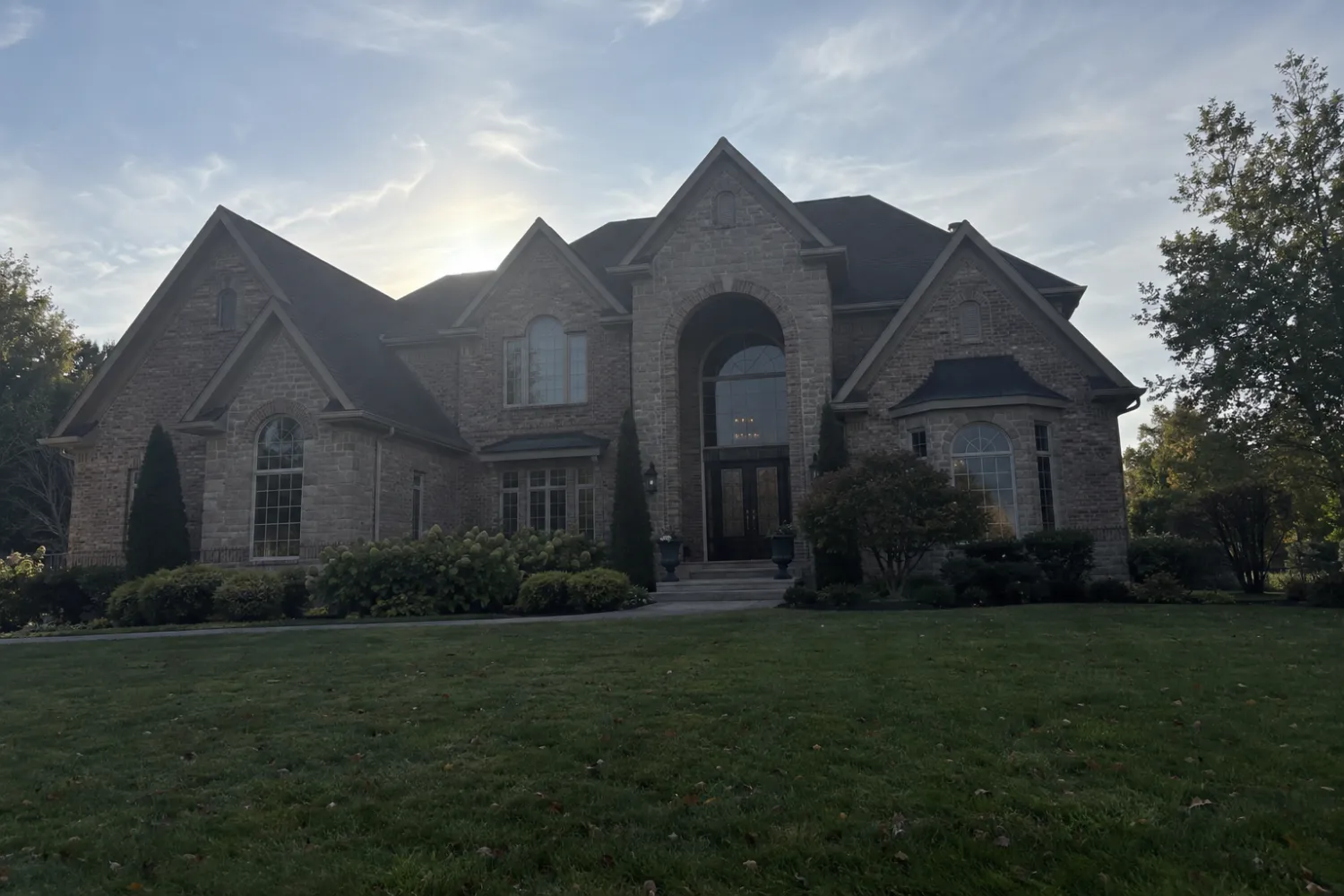
What backlighting looks like
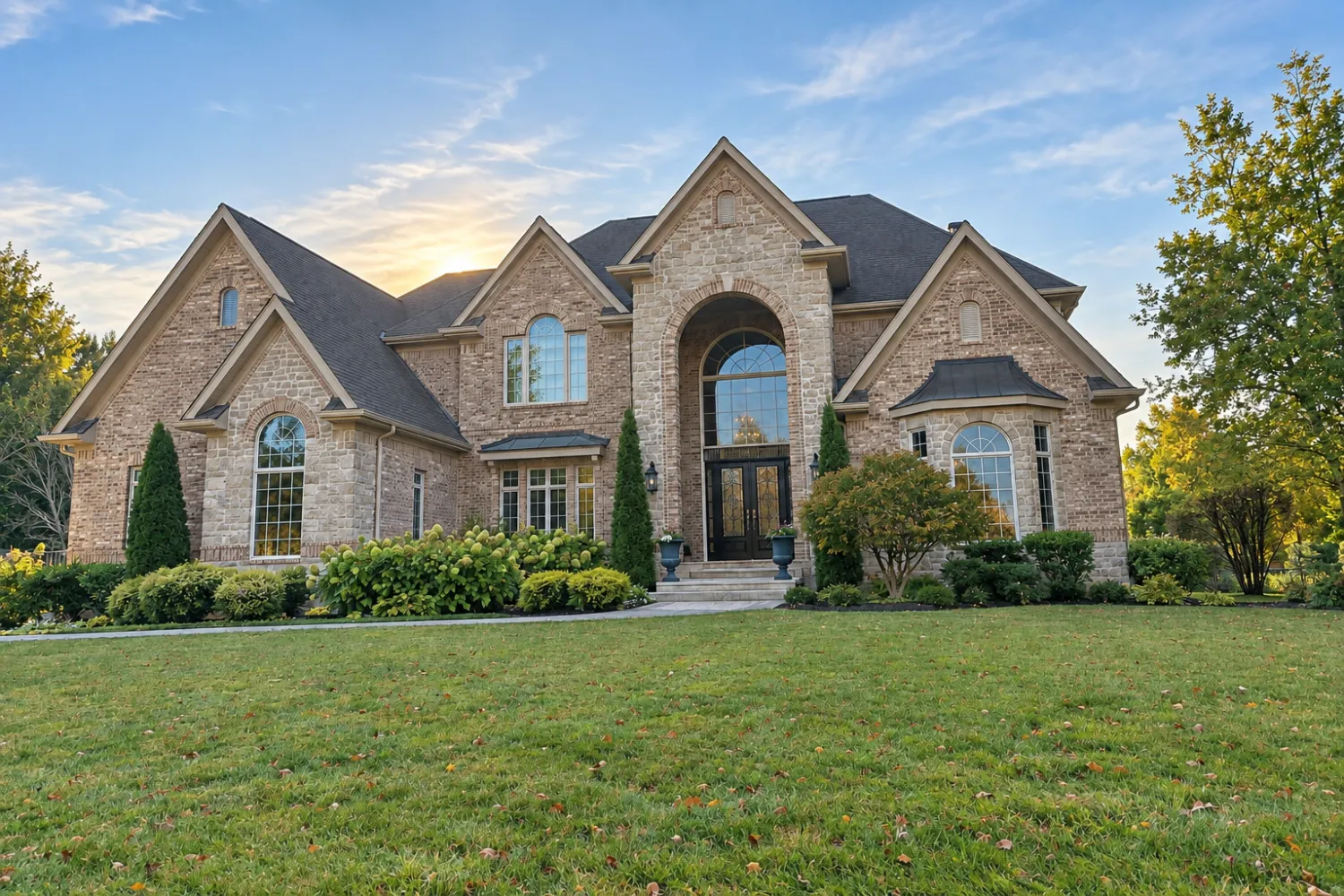
If you photograph a house with the sun behind it, the front becomes a dark shape against a bright sky. You can recover some of the detail when editing, but another visit at the right time of day always gives a better result.
Where to stand
Take at least two shots of the front of the house.
- The corner angle. Stand about 45 degrees from one front corner, so the photo shows the front and part of one side. Zillow's guide recommends an angled shot because it shows the depth and size of the house. Try both corners and keep the one with the better garage, tree or driveway line.
- Straight on, from across the street or the far edge of the front lawn. This gives the most accurate view of the façade and works well for symmetrical homes.
Then add the shots buyers want next: the rear of the house from the far end of the yard, the patio or deck, the yard itself, and any views the house offers.
Lens and height
From across the street, use the 1x lens and step back rather than switching to 0.5x. An ultra-wide lens makes the house look small and distant, with lawn and driveway filling the bottom of the frame. Use 0.5x for tight blocks where you can't step back far enough.
Hold the phone at chest height and keep it level. With a two-storey house, you may be tempted to tilt upwards to get the roof into frame. This makes the walls appear to lean inwards, and buyers may interpret it as an amateur photo. Step back instead, or accept a little more lawn at the bottom and crop the image later. Fixing leaning vertical lines explains the geometry.
Clear the frame
Walk around the front of the property before you shoot. Most of these tasks only take a minute.
- Move every car out of the driveway and off the street in front of the house. Ask your neighbours whether their car is parked directly in the shot.
- Put the rubbish and recycling bins out of sight.
- Coil up the hose and put away the kids' bikes.
- Take down any seasonal decorations.
- Close the garage door.
- Mow the lawn the day before and sweep the footpath and driveway.
- Turn on the porch lights and a few interior lights. Lit windows make a house look lived-in, even in daylight.
- Check the lawn edges and garden beds. Fresh mulch shows up in photos.
Don't remove permanent features from the frame, whether through editing or otherwise: power lines, a neighbour's house, a utility box or the highway behind the fence. California's AB 723 lists utility poles and neighbouring properties as things you can't quietly edit, and the CRMLS rules prohibit removing wires and poles from listing photos.
Overcast days
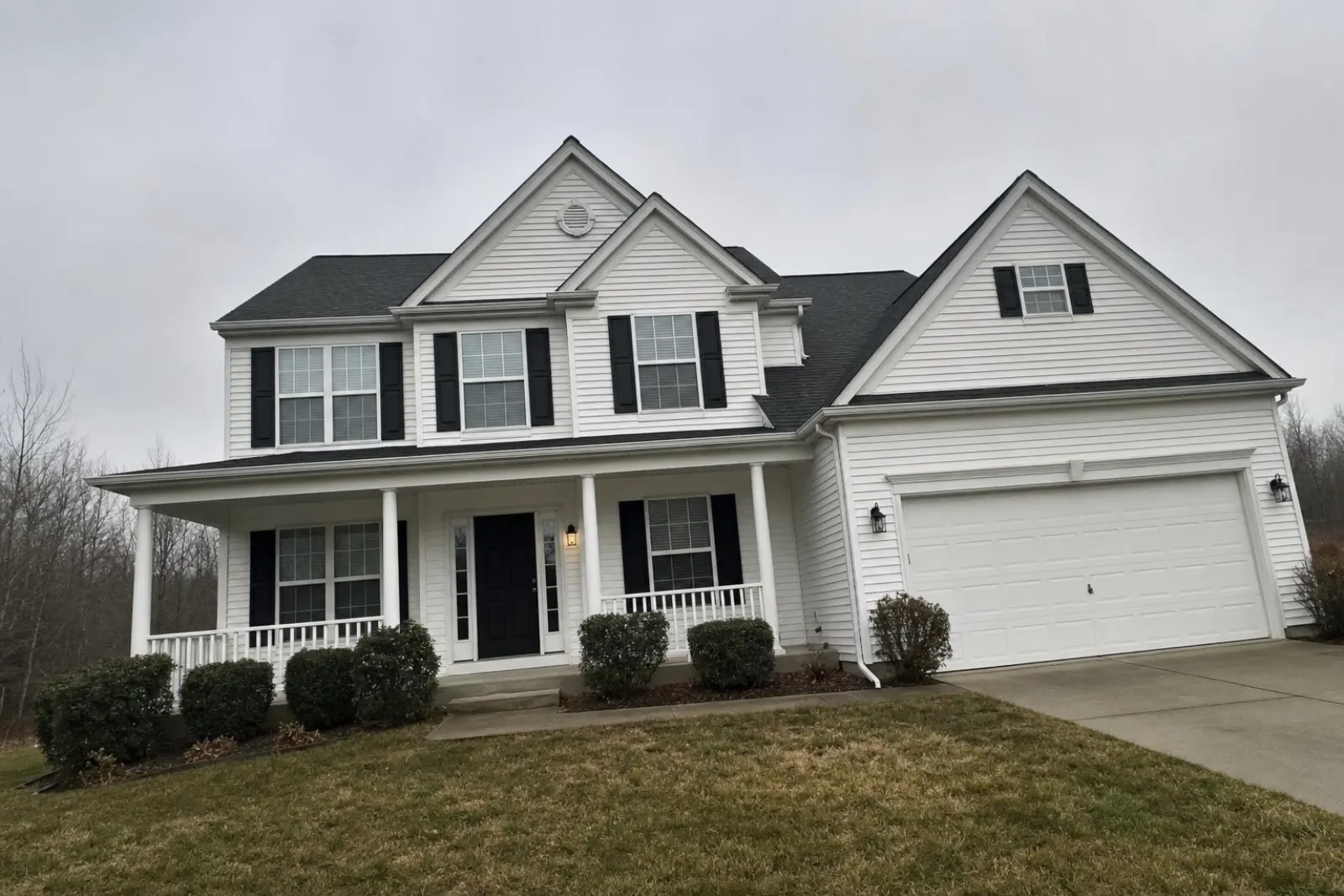
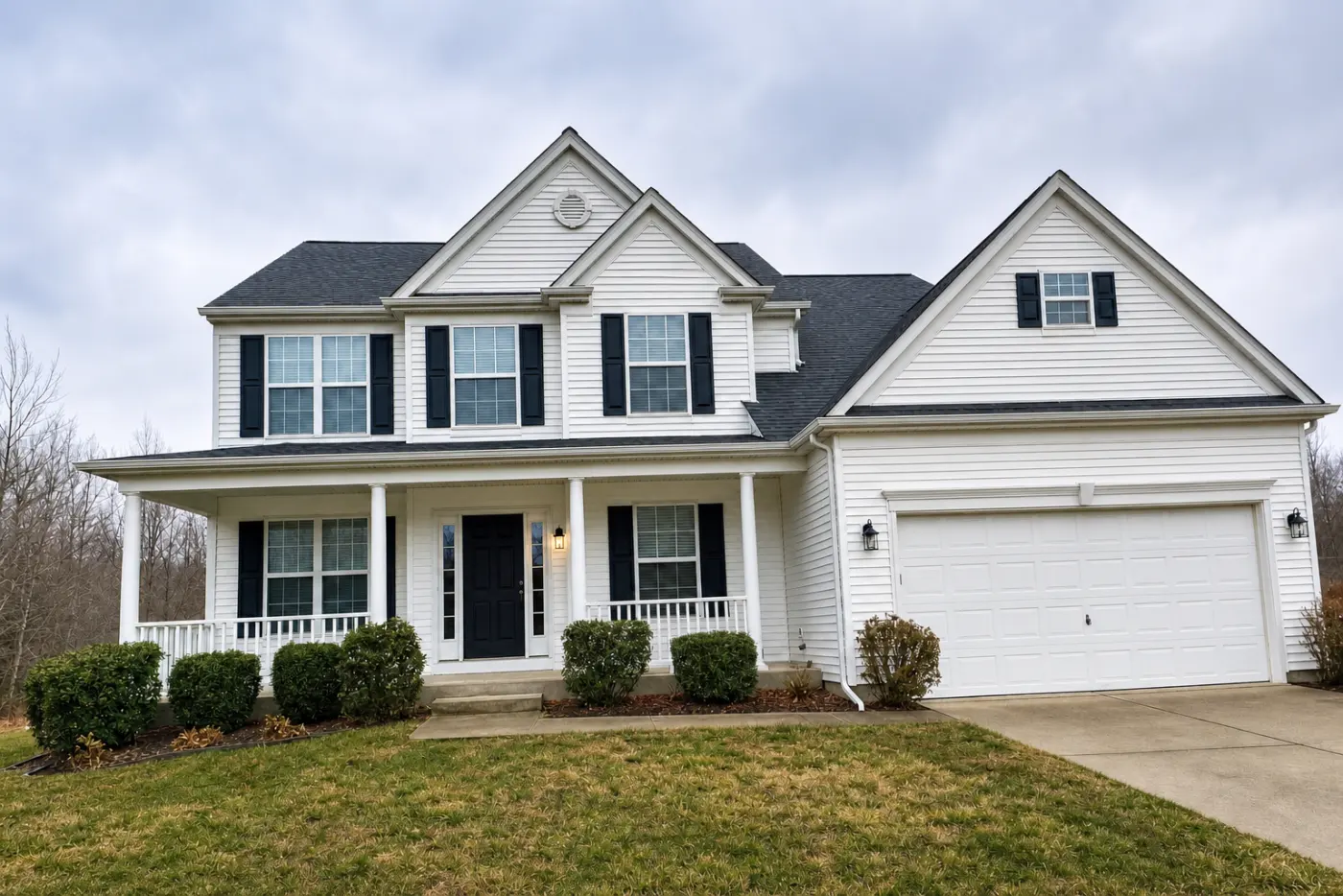
An overcast day isn't a lost day. Cloud cover spreads the light evenly, so there are no harsh shadows and the shaded side looks like the sunny side. For a north-facing house, it's often the best light you'll get.
The sky will be grey. Keep it grey. Buyers who drive past on a day like that will see what they expected. Adjust the exposure so the house is bright, even if that makes the sky look a little pale.
Fake blue skies, and why we don't make them
Sky replacement is the most common edit in property listing photos. An analysis by the real estate tech company Coraly, reported by Realtor.com, looked at nearly 40,000 main listing photos. Almost 11% showed signs of digital alteration, and sky replacement made up 69% of those. More than 90% of the altered photos carried no visible disclosure.
Plenty of people see a sky swap as harmless. Zillow's own guide for sellers suggests it. I don't agree, for two reasons.
First, there are the rules. AB 723 defines a digitally altered image as one where software or AI was used to add, remove or change elements in the image. It excludes lighting, colour, exposure and straightening only when those "do not change the representation of the real property." A new sky isn't on the exclusion list. For anything borderline, CRMLS advises: "when in doubt, err on the side of caution" and disclose. So if you replace the sky in California, label the photo and post the original alongside it. Our MLS disclosure rules guide covers where labels go on different listing boards.
Second, there's the viewing. A blue sky with fluffy clouds over a house that sits under grey cloud for most of the winter creates a bit of a letdown at the kerb. It's the first thing the buyer sees in person, and it tells them the photos were edited. They start wondering what else was changed.
That's why Real Estate Camera doesn't offer sky or twilight replacement. Enhance fixes exposure, white balance and verticals and restores detail in windows. It keeps the sky exactly as you shot it and doesn't touch the architecture or landscaping. If you want a blue sky, come back on a blue day. If you want a twilight shot, shoot one about 15 minutes after sunset, with all the lights on and your phone on a tripod. Twilight real estate photos covers costs and rules, and sky replacement covers what each listing board allows.
A phone-based workflow for exterior photos
- Check which way the house faces and choose your shooting time.
- Clear away cars, bins and hoses. Turn on the porch lights.
- Shoot the corner angle from both sides at 1x, holding your phone level at chest height.
- Shoot straight on from across the street.
- Shoot the rear of the house, the yard and the patio.
- Take three or four frames of each. The wind moves the trees, and a car always drives through.
- Run Enhance on your best shots — 1 credit per photo and 20 to 60 seconds per photo.
For the interior of the house, see taking listing photos on an iPhone and the full shot list. If you're selling without an agent, FSBO listing photos covers the whole house. Landlords photographing a building should read rental listing photos. And if your interior shots came out dark, fixing dark real estate photos will help.
To shoot and edit the exterior in one app, see the real estate photography app.
Straighten and brighten your next shot of the house front on your phone. Start for free: 1 credit.
Questions
What time of day is best for exterior real estate photos?
Shoot when the sun is shining on the front of the house. An east-facing front is best in the morning and a west-facing front in the afternoon. South-facing fronts get sun for most of the day, so avoid the hard shadows at midday. North-facing fronts are easiest to photograph on a bright overcast day.
Can I take exterior listing photos on a cloudy day?
Yes. Overcast light is soft and even, with no harsh shadows under the eaves. The sky will be grey, and that's fine. That's what buyers will see when they drive by.
Is it OK to replace a grey sky with a blue one?
It changes the photo, and in several places that needs to be disclosed. California's AB 723 exempts only adjustments such as exposure and colour that do not change how the property is represented, and CRMLS tells agents to disclose when in doubt. Label the edited image and post the original, or leave the real sky in place.
Should I use the 0.5x lens for the front of the house?
Usually not. From across the street, 1x shows the house at a natural size. The 0.5x lens makes the house look smaller and further away and puts a lot of driveway and lawn in the foreground. Save it for tight blocks.
Are twilight photos worth it for a listing?
For a house with good exterior lighting, a view or a pool, one twilight cover photo is usually enough. Redfin suggests 2 to 5 twilight photos alongside the daytime set. A virtual twilight image should be labelled, and Stellar MLS bans twilight images that add lighting the house does not have.