 Real Estate Camera
A typical three-bedroom listing should have about 25 photos. Zillow's photography guide puts the ideal at 22 to 27 photos, based on Zillow research. Go lower for a one-bedroom condo, higher for a big house with land, and never pad the gallery with near-duplicates just to hit a number.
The rest of this page covers how the number changes with the property, what the MLS allows, how to order the gallery and what to cut.
What the Zillow guidance actually says
Zillow's guide for sellers makes three points about photo count. Twenty-two to 27 photos is the ideal range. Homes with fewer than nine photos were about 20 percent less likely to sell within 60 days. And homes with more than 28 photos took longer to sell.
The point about homes with more than 28 photos is easy to misread. Zillow itself suggests the reason is price, not the photos: the homes with 28 or more photos were 12 percent more expensive, and extra photos don't make up for a high asking price. So the finding isn't "more than 28 photos hurts". It's closer to "past a certain point, more photos stop helping".
Two caveats. The article is dated November 2019, and it's written for home sellers, not as a research paper. I'd treat 22 to 27 as a sensible default, not a rule. The finding I'd hold onto is the low end: a listing with a handful of photos is a listing buyers skip.
How many photos by type of property
These are the ranges I work from. They assume every photo shows something the others don't.
| Property | Photos to post | Where they go |
|---|---|---|
| Studio or 1-bed condo | 12 to 18 | Front or building, each room once, kitchen twice, amenities |
| 2-bed condo or townhouse | 18 to 24 | Add a second living-area angle, the balcony or patio, parking |
| 3-bed house | 22 to 30 | 2 of each main room, 1 of each secondary room, 3 or 4 exteriors |
| 4-bed+ house | 28 to 40 | More rooms, not more angles of the same rooms |
| Large home with land or amenities | 35 to 50 | Grounds, outbuildings, pool, views, aerials if your board allows them |
The ranges above the Zillow window aren't a contradiction. A five-bedroom house on four acres has more to show than a three-bedroom on a quarter-acre, and a buyer wants to see the barn. What doesn't earn a spot is the fourth angle of the same bedroom.
Shoot about twice what you'll post. It's free on the day, and it gives you choices when one angle turns out to have a reflection or a leaning wall.
What your MLS allows
Every MLS sets its own limit, and they vary a lot. Two examples I checked:
- CRMLS's Flexmls help page says you can upload 75 photos per listing, each up to 15 MB or 3000 by 2000 pixels. The same page says photos that don't accurately show the property, such as staging, must be captioned as such.
- Realcomp in Michigan allows up to 99 photos including the primary photo. It requires a primary photo of the front of the property within 48 hours of entering the listing, and bans agency signs, watermarks and text on photos (Realcomp's own watermark is the exception).
Both limits are far above what a normal listing needs, which is the usual pattern. The limit is rarely the constraint. Your own editing is. Look up your board's rules once and keep them in your notes, including any rules about the primary photo, text on images and staging captions.
The order matters as much as the count
The first photo is usually the one that shows up in search results, so it decides whether anyone opens the listing. After that, lay the photos out like a walk through the house:
- Best front exterior.
- Entry.
- Living room and family room.
- Kitchen, all angles together, then dining.
- Primary bedroom, primary bath.
- Other bedrooms, other baths.
- Office, bonus room, basement.
- Backyard, patio, pool, then extras.
Keep each room's photos together. If there's one thing buyers will pay for, like a lake view or a new kitchen, it can move up to second place. The room-by-room shot list goes through each room in detail.
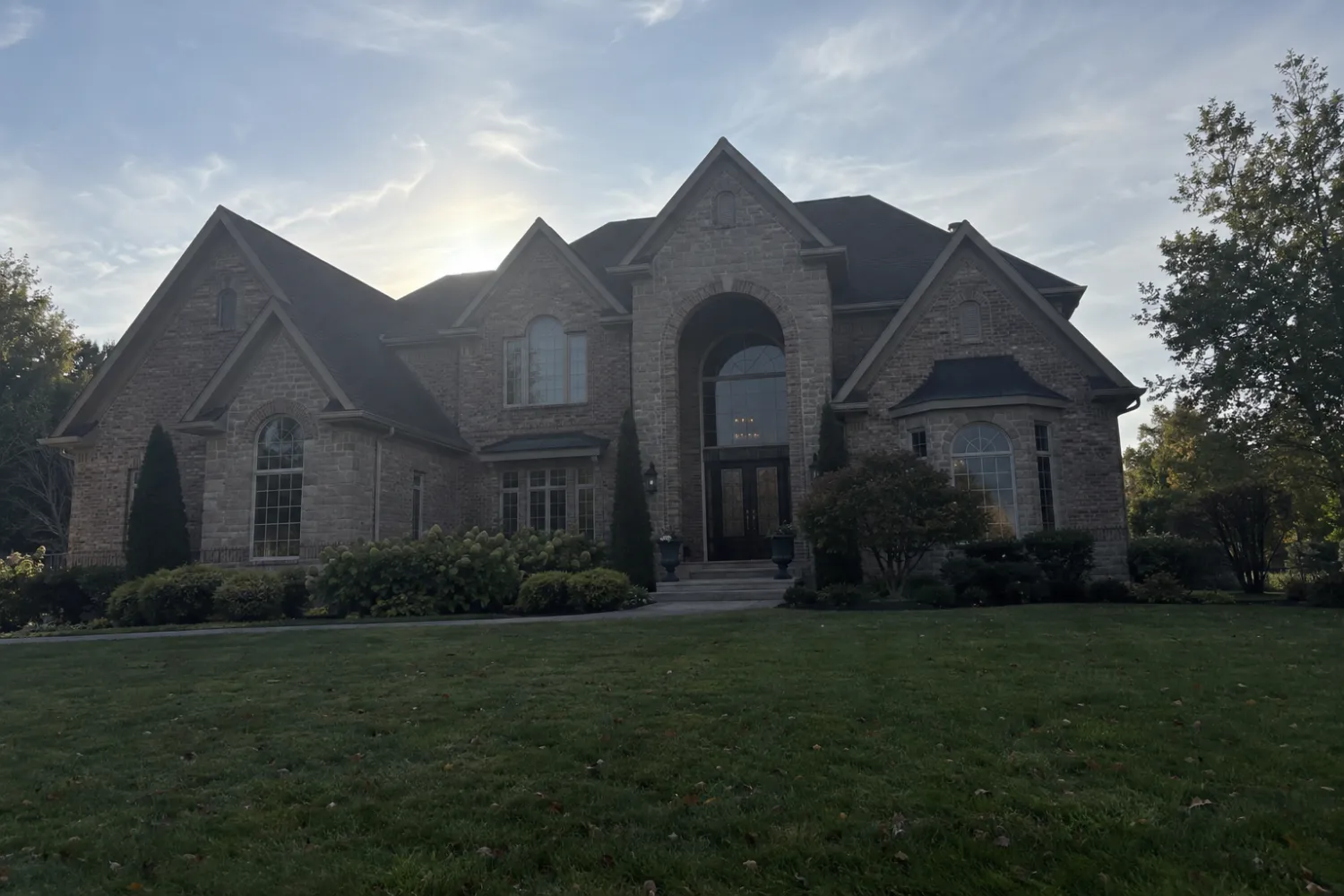
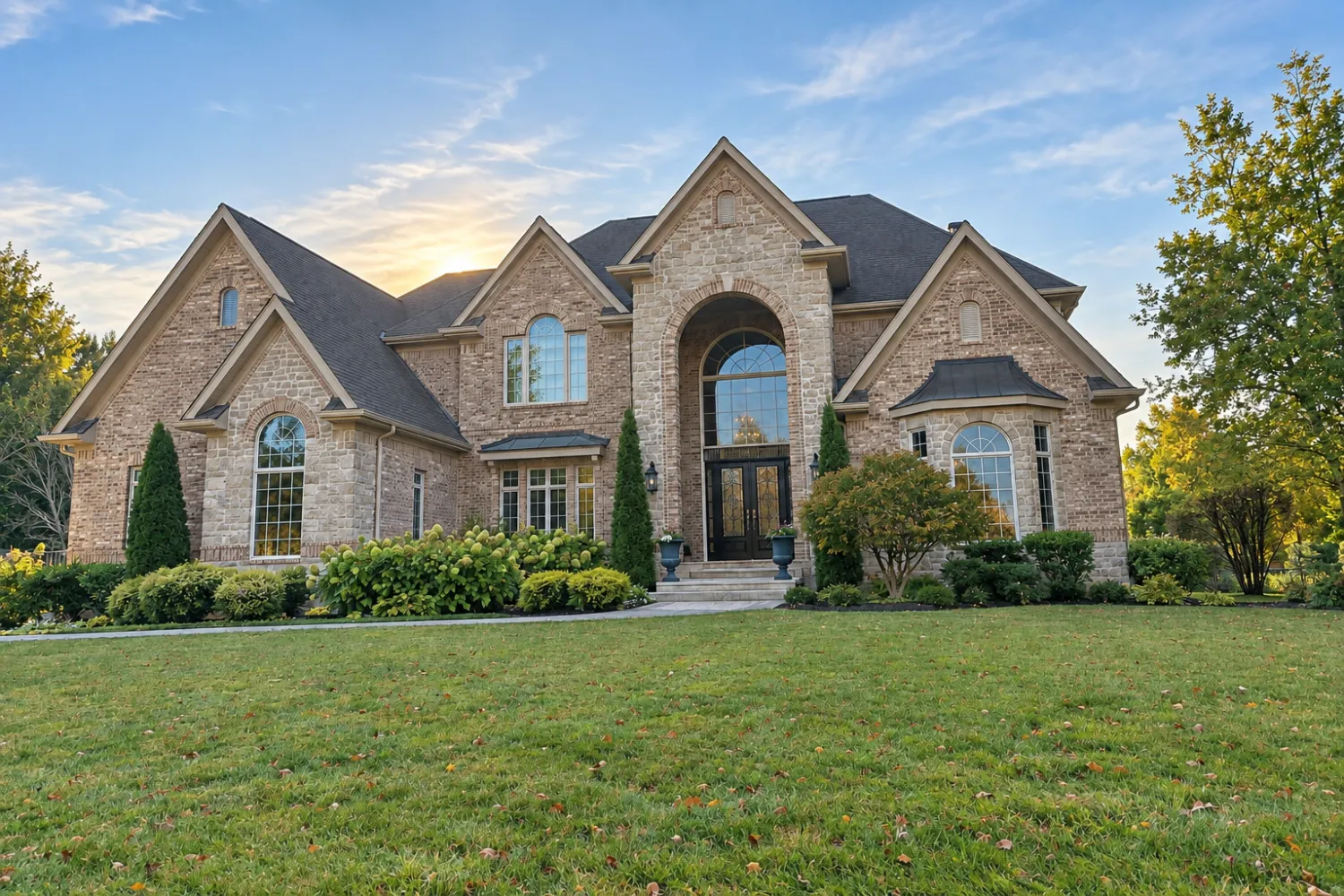
The front photo deserves the most care of anything in the gallery. If yours was shot with the sun behind the house, it's worth fixing before it becomes the thumbnail.
What to cut
Cutting is where a lot of listings go wrong. After a shoot you might have 60 frames. Here's what goes first:
- Near-duplicates. Two shots of the same bedroom from nearly the same corner. Keep the sharper one.
- Closets, unless it's a real walk-in. Same for laundry nooks, utility rooms and the furnace.
- An ordinary powder room. If it's small and plain, it adds nothing.
- Close-ups of things that aren't special. A standard faucet, a thermostat, a light switch.
- Anything with a technical problem: leaning walls, your reflection in a mirror or a stainless fridge, a blown-out window with a dark room, a blurry frame.
- Rooms that look worse in a photo than in person. A narrow hallway or a cramped mudroom can make the house read as smaller. Skip it and let the showing do the work.
- Street shots and neighborhood views, unless there's something worth showing, like a park across the road.
Don't cut a room buyers will look for. Every bedroom and every full bathroom should appear, even the plain ones. A missing bathroom makes people wonder what's wrong with it.
When fewer photos is the right call
Some listings should sit below the range, and that's fine.
- A fixer-upper sold as-is. Show the exterior, the layout and the lot honestly. Twelve clear photos of a house that needs work tell buyers more than 30 that try to hide it.
- Vacant land. A few shots of the lot from the road and from inside it, the view if there is one, and whatever structures or access exist. Realcomp, for one, still wants at least one photo on a land listing.
- A tenant-occupied rental where you can't get into every room. Post what you can shoot well and say in the remarks that more access is available at a showing.
What you should avoid is the lazy version of fewer: six phone shots from the doorway of each room. That's the kind of listing Zillow's under-nine-photos finding is about.
Keep the gallery consistent
Twenty-five photos that look like they came from the same house beat 40 that don't. That means similar color from room to room, straight verticals throughout, and no rooms that are noticeably darker than the rest.
If you're shooting on a phone, that consistency is the hard part. Real Estate Camera's Enhance fixes light, white balance and verticals, 20 to 60 seconds a photo for 1 credit, so a 25-photo gallery uses 25 credits. The 60-credit pack at $24.99 covers two listings that size, and credits don't expire. Your first credit is free, if you'd like to try one photo before buying anything.
For empty rooms, virtual staging costs 2 credits a photo. Many boards want staged photos labeled. CRMLS's help page, for one, says they must be captioned. The app flags staged files as "virtually staged" but doesn't print the label on the image, so add it in the caption. More in virtual staging MLS rules. And if you're shooting on a phone, real estate photos on an iPhone covers the settings.
Questions
How many photos should a real estate listing have?
For a typical three-bedroom house, around 25 photos. Zillow's photography guide puts the ideal range at 22 to 27, based on its own research. Go lower for a small condo and higher for a large home with land, but only if each extra photo shows something new.
Is there a maximum number of listing photos?
Yes, and it depends on your MLS. CRMLS's Flexmls help page allows 75 photos per listing, and Realcomp in Michigan allows up to 99. Check your own board's rules, since limits and file-size rules differ.
Can a listing have too many photos?
Yes. Zillow's guide notes that homes with more than 28 photos took longer to sell, though it suggests that's likely because those homes were more expensive, not because of the photos. More practically, near-duplicates bury your best shots.
What should the first listing photo be?
Usually the front exterior, whole house in frame, shot when the sun is on the facade. Some MLS boards require it: Realcomp requires a photo of the front of the property as the primary photo within 48 hours of entering a listing.
Which listing photos should I cut?
Near-duplicates of the same room, closets, laundry nooks, utility rooms, ordinary powder rooms, close-ups of things that aren't special, and anything with a leaning wall or a reflection of you in it.